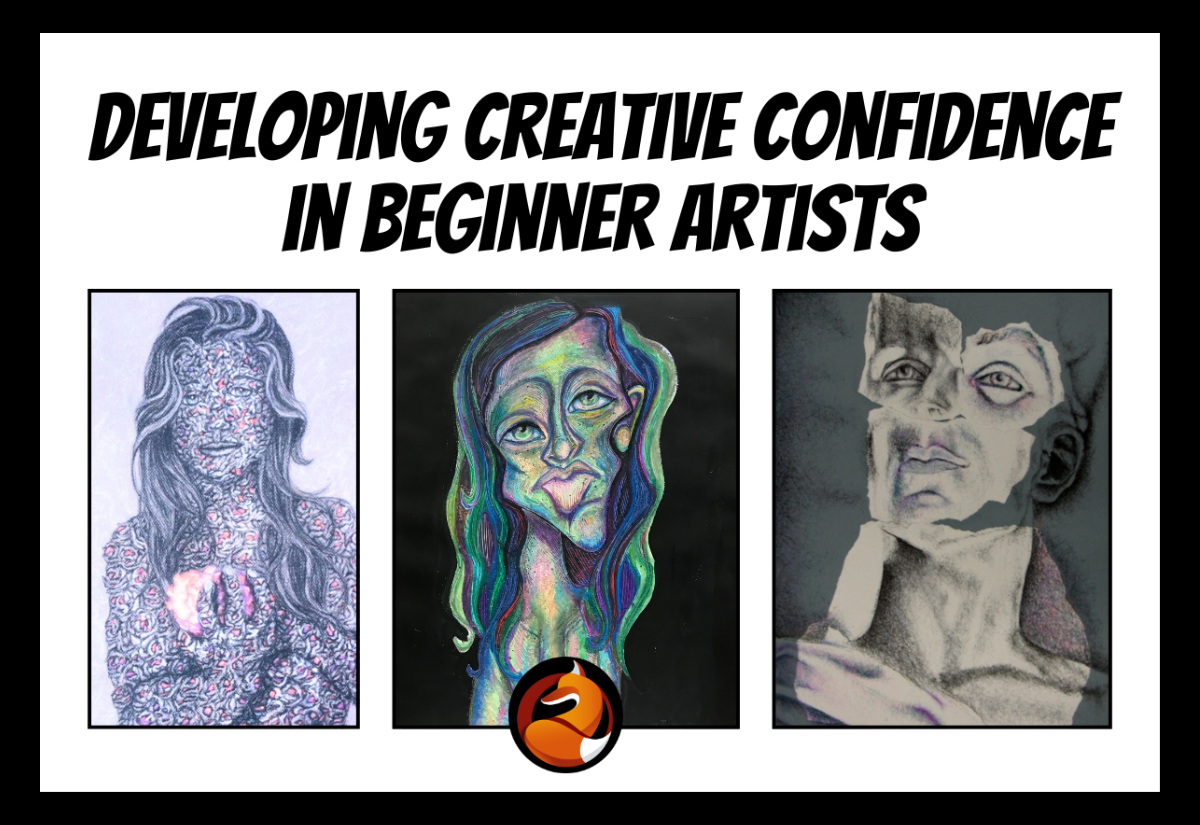
As an experienced art teacher, I’ve had the joy of guiding countless students from hesitant scribblers to confident creators. One of the most common questions I hear from beginners is “What should I draw?” Whether it comes from uncertainty or a fear of making mistakes, that simple question often blocks the creative spark before it ever has a chance to grow. But what if we reframed the journey? What if, instead of asking what to draw, we focused on how to explore and play with ideas?
Why Creative Confidence Matters
Creative confidence isn’t about being perfect. It’s about embracing experimentation, trusting your instincts, and finding joy in the act of making. In my classroom, I’ve watched timid students blossom once they realized that their unique perspective matters. Art becomes less intimidating and more empowering when students learn that the process is more important than perfection.
Learn More: Ideation 101
Start With Simple Prompts: What Should I Draw?
When students ask, “What should I draw?”, I offer prompts that spark curiosity without overwhelming them. Here are some beginner-friendly starters:
- Daily objects on your desk
- Leaves or flowers outside your window
- A favorite snack
- Your pet in an unusual pose
- Imaginary creatures inspired by your daydreams
These simple ideas give focus but leave plenty of room for creativity. Sometimes, choosing neutral subjects to draw removes the pressure to “make it look perfect.”
Exploring Stuff to Draw for Confidence
Getting comfortable with drawing begins with familiarity. Choose subjects that feel approachable and fun for your students:
Everyday Still Life
Select a few items from around your home, an apple, a mug, and a notebook, and arrange them in an interesting composition. This simple exercise helps your students observe shapes and forms without judgment.
Try This: Drawing a Graphite Sphere
Nature Objects
Leaves, rocks, and flowers offer endless variety. Have your students draw them from different angles, zoom in on details, or turn them into stylized patterns.
Abstract Ideas
You don’t always have to draw something recognizable. Let feelings or music inspire shapes, lines, and colors in your students’ minds.
Try This: “Two Fears” Advanced Drawing Project
Understanding Art Patterns as Creative Play
Art patterns aren’t just decorative; they’re tools for building confidence. Repeating shapes and motifs helps your students focus on rhythm, balance, and design.
Here are some fun pattern ideas to try:
- Zentangle-inspired lines
- Geometric tessellations
- Repetitive floral or leaf shapes
- Color gradients in concentric circles
Patterns help break down complex visuals into manageable parts. They’re especially great when combined with mindful breathing; art becomes not just creative, but calming.
Positive and Negative Space: Seeing Beyond the Object
One of the biggest breakthroughs for beginner artists is understanding positive and negative space. Instead of seeing only the object you’re drawing (positive space), start pointing out the space around it (negative space). This shift improves accuracy and adds a fresh dimension to your students’ art.
Try This Exercise
- Choose a simple object (like a coffee mug).
- Without drawing the mug itself, sketch the shapes around it.
- Observe how the spaces between and around objects create their own interesting forms.
This might feel tricky at first, but it’s incredibly empowering. Seeing negative space trains your eyes to notice relationships between shapes, enhancing both drawing skills and creative confidence.
Turning Mistakes Into Meaningful Discoveries
In art, mistakes aren’t failures; they’re discoveries. When a line goes astray, or a shape feels off, ask:
- Does this add character?
- Can I turn this into something unexpected?
- What if I accentuate this “flaw”?
This mindset shift transforms hesitation into curiosity. The more you welcome uncertainty, the more your creative confidence grows.
Practice With Purpose: Structured & Free Drawing Time
Confidence comes through practice, both structured and unstructured.
Structured Practice
Use specific exercises to build skills:
- Drawing geometric shapes
- Copying simple line drawings
- Practicing shading techniques
- Exploring positive and negative space
Free Drawing Time
Set aside space for joy:
- Doodle whatever comes to mind
- Combine random elements into a fantasy scene
- Experiment with art patterns
Both structured and free drawing are essential. The structured builds competence; the free builds voice.
Encouragement for Every Beginner Artist
If your students ever find themselves stuck on the question, “What should I draw”? remember:
- Start small. Choose simple stuff to draw that makes them curious.
- Play with patterns. They improve visual fluency and spark joy.
- Notice positive and negative space. It opens new ways of seeing.
- Embrace happy accidents. Mistakes often lead to magic.
Creative confidence isn’t a destination; it’s a journey. As your students practice and explore, they’ll find their own artistic voice and the courage to express it.
Are you preparing to teach an AP®Art course? Then consider this year-long curriculum.